
1000 Visiting Card Price in India – Get a Quote

The 1000 visiting card price can cost ₹700 and ₹3,600 for the full set, and go up to ₹70,000 for premium PVC plastic cards. Basic single-side cards on standard paper sit at the lower end. Double-sided cards with lamination, spot UV, or premium 400 GSM stock cost more.
The price difference comes down to a few factors:
- Paper weight (GSM)
- Finish
- Printing sides
- Print method (digital or offset)
- Any special coating like spot UV or soft-touch lamination
Quantity also plays a role. Printing 1000 cards works out cheaper per piece than printing 250 or 500, since setup costs get spread across more units.
Get a breakdown of the 1000 visiting card price for every card type, explains which GSM and finish suits your business, and helps you avoid common buying mistakes.
Quick Price Summary
| Card Type | Price (1000 pcs) | Best For |
|---|---|---|
| Budget Standard | ₹700 – ₹1500 | Freelancers, short-term use |
| Matte / Glossy Standard | ₹900 – ₹1,500 | Everyday corporate use |
| Premium (400 GSM / Spot UV) | ₹1,600 – ₹3,000 | Client-facing roles, sales teams |
| Velvet / Soft Touch / PVC | ₹3,500 – ₹12,000 | Leadership, luxury brands, events |
1000 Visiting Card Price in India
Here is a detailed breakdown of the 1000 visiting card price across common card types in the Indian market:
| Card Type | Approx. Price (1000 Qty) | Best For | Quality Level |
|---|---|---|---|
| Standard Single-Side (250–300 GSM) | ₹600 – ₹900 | Internal use, events, freelancers | Budget |
| Standard Double-Side (300 GSM) | ₹1,050 – ₹1,500 | Everyday business cards | Budget–Standard |
| Matte Laminated (300–350 GSM) | ₹1,000 – ₹1,500 | Consultants, corporate staff | Standard |
| Glossy Laminated (300–350 GSM) | ₹1,800 – ₹2,500 | Retail, sales, colourful branding | Standard |
| Textured / Kraft | ₹2,250 – ₹2,700 | Boutique brands, eco-conscious businesses | Standard–Premium |
| Premium Thick (400 GSM) | ₹3,100 – ₹4,200 | Leadership, client meetings | Premium |
| Spot UV | ₹900 – ₹3,000 | Brand-focused businesses | Premium |
| Velvet / Soft Touch | ₹2,000 – ₹4,000 | Real estate, hospitality, luxury brands | Premium |
| PVC / Plastic | ₹60,000 – ₹70,000 | Ultra-premium, membership-style cards | Ultra-Premium |
Note: Prices vary by city, printer, and design complexity. Always request a physical sample before placing a bulk order.
Below is a Tulja Enterprise sample work for your reference.
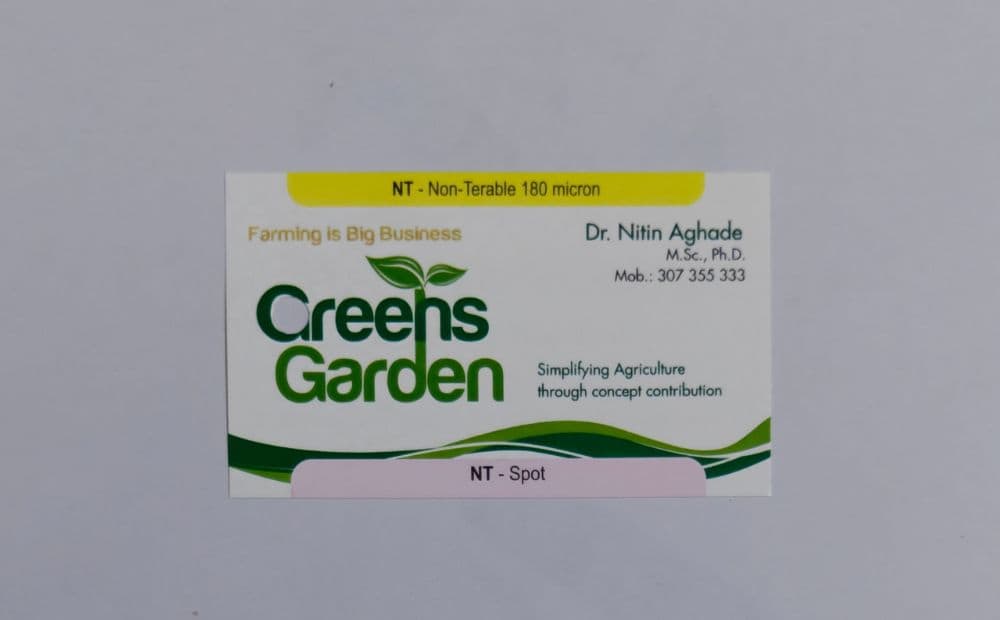 Best for gyms, salons, restaurants, delivery services, outdoor businesses, and professionals who need durable, long-lasting visiting cards.
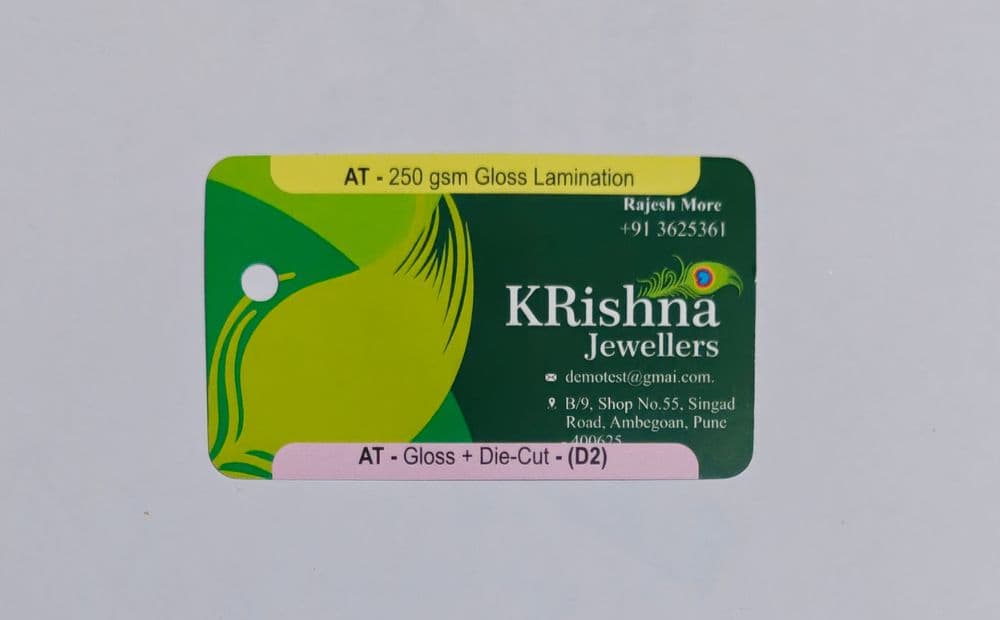 Best for retail stores, startups, sales teams, events, and businesses looking for vibrant, cost-effective visiting cards.
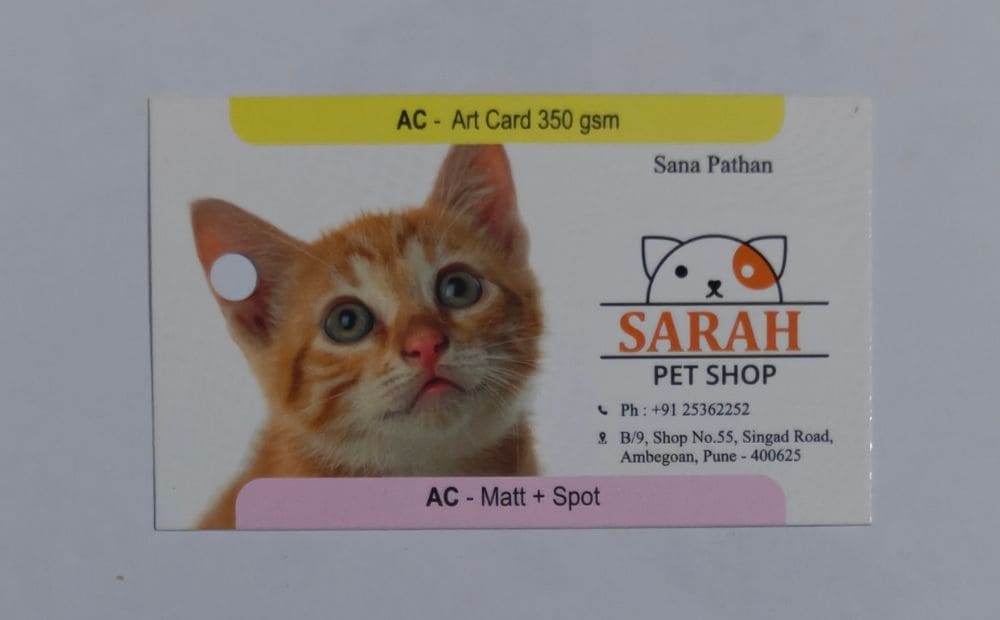 Best for corporate companies, service businesses, doctors, lawyers, accountants, and everyday professional networking.
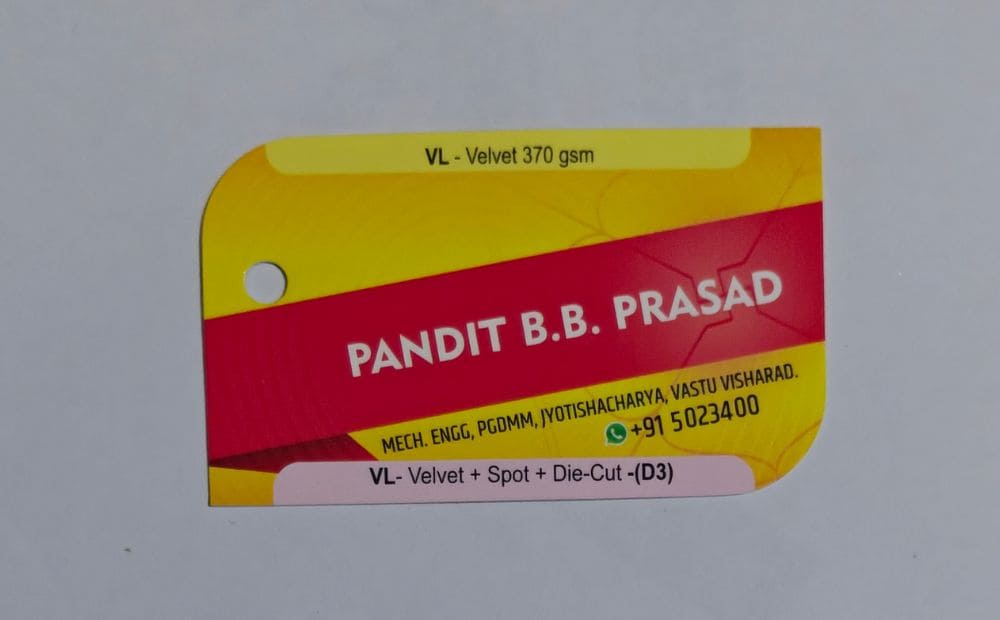 Best for creative professionals, marketing agencies, consultants, fashion brands, and businesses seeking a premium soft-touch finish.
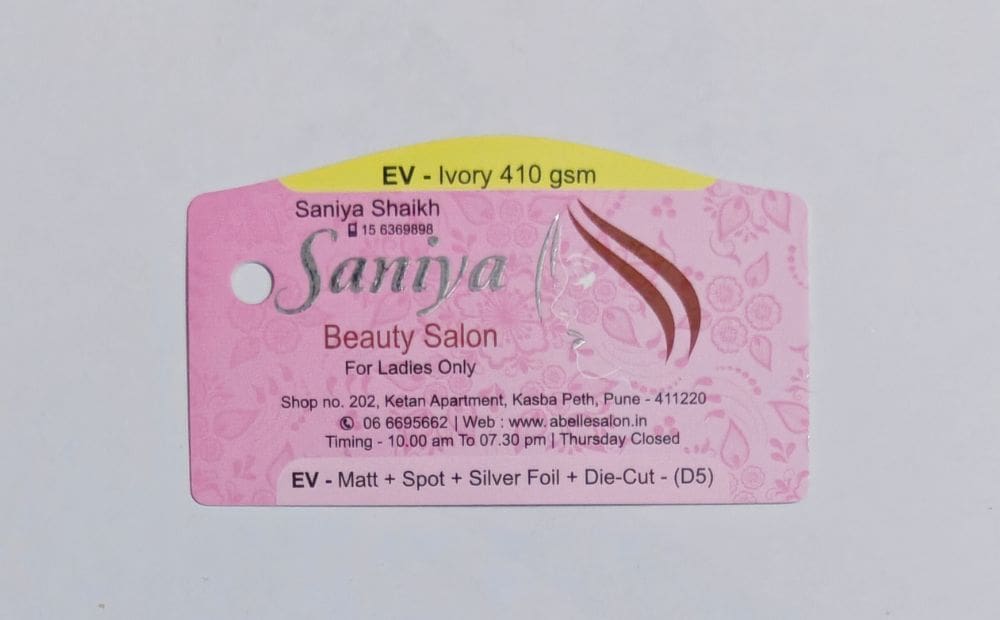 Best for luxury brands, premium businesses, architects, interior designers, and high-end corporate professionals.
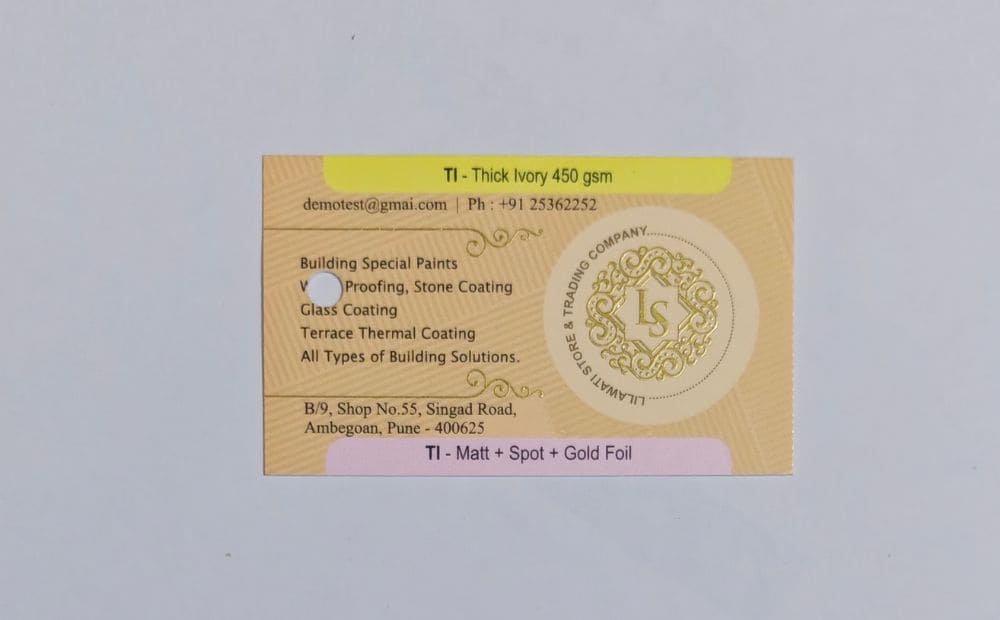 Best for CEOs, luxury brands, jewellery stores, real estate consultants, financial advisors, and premium corporate executives.
Why Does the Price of Visiting Cards Differ?
- Paper GSM: Heavier stock (350–400 GSM) costs more than standard 250–300 GSM.
- Coating: Matte or gloss coating adds a small premium over plain uncoated paper.
- Lamination: Velvet and soft-touch lamination cost more than basic gloss or matte lamination.
- Printing colours: Full-colour (CMYK) printing costs more than single or two-colour jobs.
- Single vs double side: Double-sided printing typically adds 15–25% to the cost.
- Digital vs offset printing: Digital suits smaller runs; offset becomes cheaper per piece at volumes like 1000+.
- Quantity: Larger orders reduce per-card cost since setup charges are shared across more pieces.
- Design complexity: Multiple spot colours, foil, or embossing raise production time and cost.
- Special finishes: Spot UV, foil stamping, and edge painting are priced as add-ons.
Which GSM Should You Choose?
GSM (grams per square metre) measures paper weight. The higher the number, the thicker and sturdier the card feels.
| GSM | Thickness | Feel | Durability | Best Use Case |
|---|---|---|---|---|
| 250 GSM | ~0.30 mm | Light, flexible | Low–Moderate | Short-term or bulk giveaway cards |
| 300 GSM | ~0.30–0.35 mm | Standard card feel | Moderate | Everyday business cards |
| 350 GSM | ~0.40–0.49 mm | Stiff, substantial | Good | Corporate and client-facing roles |
| 400 GSM | ~0.41–0.56 mm | Sturdy, premium | Very Good | Leadership, premium branding |
| 450+ GSM | 0.6 mm+ | Ultra-thick, luxury | Excellent | Statement cards, luxury brands |
Standard Visiting Card Size
The standard visiting card size in India is 90mm x 54mm, close to the international size of 3.5 x 2 inches (89mm x 51mm). Most Indian printers work with a 92mm x 54mm bleed size, trimmed down to the final 90mm x 54mm card.
Sticking to the standard size matters for practical reasons. Cards fit neatly into standard cardholders, wallets, and business card binders used across India. Printers already use ready templates for this size, which keeps costs predictable, since custom die-cut shapes and non-standard sizes usually cost more. A standard size also looks familiar and professional to recipients, rather than awkward to store.
A distinct shape is possible too, but it usually means a price increase and longer production time for custom cutting.
How to Reduce Visiting Card Price Without Reducing Quality
- Choose 300–350 GSM matte instead of premium finishes if the budget is tight; it still looks professional.
- Print double-sided instead of two separate single-sided runs for details like a second language.
- Order a round bulk number like 1000; per-card cost drops significantly compared to 250 or 500.
- Avoid over-customising with foil, embossing, or die-cuts unless the brand specifically needs it.
- Get a digital or physical proof before printing; reprints from errors cost more than the original order.
- Use offset printing instead of digital for 1000+ quantities, since offset is more economical at that volume.
- Order in advance rather than urgently; rush orders usually carry a premium.
Common Mistakes Buyers Make
- Ordering too many business cards before finalising the design. Job titles, numbers, and addresses change, and unused stock goes to waste.
- Skipping the proof stage. A printed proof catches spelling errors, colour shifts, and layout issues before 1000 copies are locked in.
- Ignoring bleed and safe margins. Text or logos placed too close to the edge can get trimmed off during cutting.
- Choosing the cheapest paper without checking a physical sample. What looks fine on screen can feel flimsy in hand.
- Using low-resolution logos or images. A logo that looks sharp on a website often turns pixelated when printed.
- Focusing only on price and ignoring durability. A card that bends or fades quickly can undermine the impression it’s meant to create.
- Not matching card thickness to cardholders and wallets. Extremely thick cards (450+ GSM) may not fit standard slots.
Why Businesses Choose Tulja Enterprise
Tulja Enterprise works with corporate and industrial clients across India who need reliable, print-ready visiting cards without guesswork. Rather than pushing the most expensive paper option, the team helps buyers match GSM and finish to how the card will actually be used, whether that’s a sales team handing out hundreds of cards a month or a leadership team ordering a smaller, premium batch.
Multiple paper options are available, from standard matte and glossy stock to premium thick and soft-touch finishes, so businesses aren’t limited to a single template. Bulk corporate ordering is handled with consistent quality across every card in the run, along with a quick consultation upfront to avoid costly reprints later. For companies that order stationery regularly, this kind of guidance helps keep printing costs predictable over time.


