
Types of Labels by Industrial Use Cases
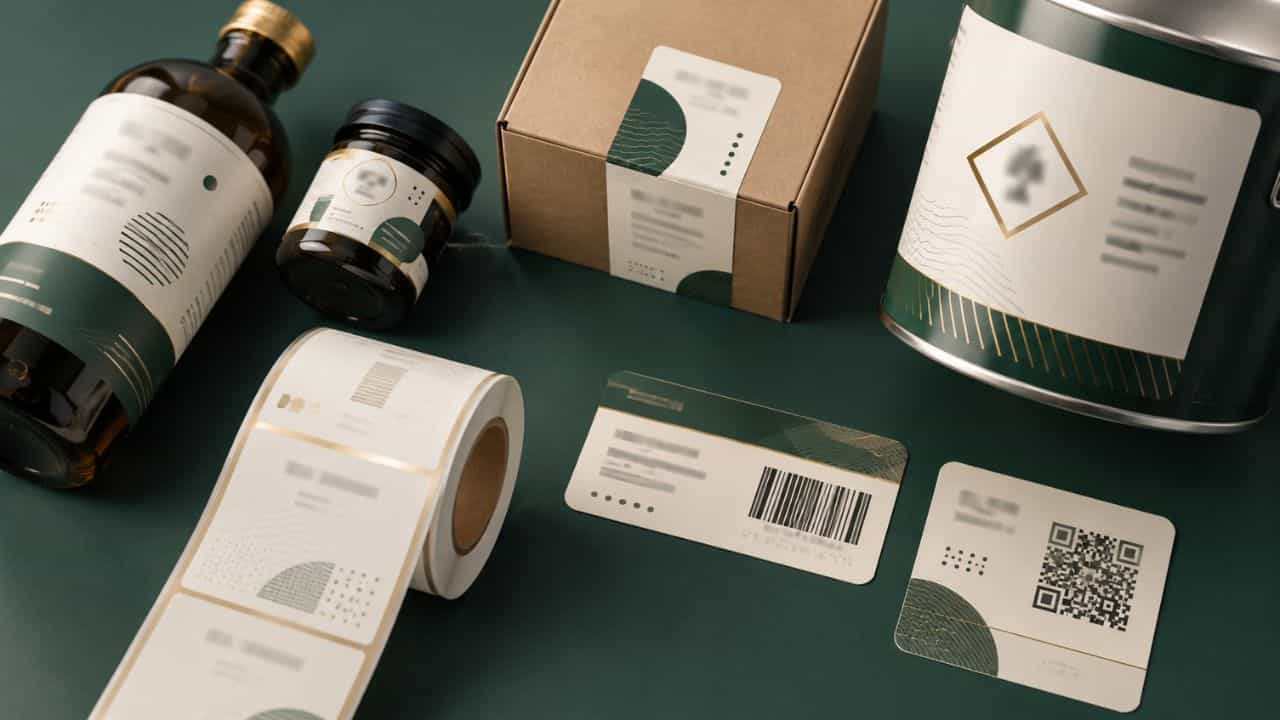
Every product that leaves a factory carries a label of some kind. A label tells a warehouse worker which pallet to load, tells a chemical handler what is inside a drum, tells a customer what a product costs, and tells a regulator that a batch meets safety standards. Understanding the different types of labels is not a design exercise. It is a procurement decision that affects compliance, traceability, and how customers experience a product.
This guide breaks down labels by business purpose: identification, compliance, traceability, packaging, branding, and industrial use. It explains where offset and digital printing fit, how to choose the right label for a product, and the mistakes procurement teams commonly make when sourcing labels.
What Are Labels?
A label is any printed material attached to a product, package, or asset that communicates information. That information can be as simple as a brand name, or as detailed as a 14-digit regulatory license number, a batch code, and a barcode, all on a single small sticker.
Labels matter in manufacturing because they carry information that cannot travel any other way once a product leaves the factory. A label is often the only place where a product’s identity, safety information, and compliance status exist together. Get it wrong, and a shipment can be held at a warehouse, rejected by a retailer, or flagged by a regulator.
Why Labels Are Important for Businesses
Labels support the business in ways that go well beyond appearance:
- Regulatory compliance: many labels are not optional. Authorities such as FSSAI, the Legal Metrology department, BIS, and BEE require specific information to be printed before a product can legally be sold in India.
- Product identification: barcodes and SKU labels let a business track what a product is without opening the box.
- Inventory and warehouse accuracy: asset and pallet labels reduce picking errors and misplaced stock.
- Brand recognition: a label is often the first physical touchpoint a customer has with a brand.
- Customer communication: ingredients, usage instructions, and safety warnings protect both the customer and the business.
- Traceability: batch and lot labels allow a business to trace a defective product back to its exact production run, which matters during a recall.
- Logistics: shipping and dispatch labels keep goods moving accurately through multiple handling points.
Types of Labels by Business Purpose
Product Identification Labels
Product name labels, SKU labels, barcode labels, and QR code labels exist to answer one question: what is this item? These labels are used across nearly every industry, from FMCG to industrial manufacturing.
Barcode and QR code labels are usually digitally printed because the data, a serial or batch-linked code, changes with every unit or run. Product name labels on stable, high-volume SKUs are often offset printed instead, since the design stays the same across print runs. Common materials include paper, PP synthetic, and polyester, depending on how much handling the label will face.
Regulatory and Compliance Labels
India has more mandatory labeling requirements than most procurement teams expect, and they vary by industry and product category.
| Label Type | Industry | Purpose | Common Printing Method |
|---|---|---|---|
| FSSAI License and Nutrition Labels | Food and beverage | Mandatory license number, ingredients, allergens, nutrition table | Offset |
| Legal Metrology (MRP and Net Quantity) Labels | All packaged retail goods | MRP, net quantity, manufacturer address, dates | Offset |
| AGMARK Certification Labels | Ghee, edible oils, honey, agri produce | Grade certification for agricultural produce | Offset |
| India Organic / Jaivik Bharat Labels | Organic food and agriculture | Certifies organic production standards | Offset |
| AYUSH Product Labels | Ayurvedic, Unani, homeopathic products | Mandatory declarations for AYUSH-licensed products | Offset |
| Chemical Hazard Labels (GHS-style) | Chemicals | Hazard pictograms, signal words, precautionary statements | Digital |
| BEE Star Rating Labels | Electronics and appliances | Energy efficiency rating from 1 to 5 stars, model-specific | Digital |
| Hallmark Documentation and Tags | Jewellery (gold and silver) | Purity and HUID reference accompanying each hallmarked piece | Digital |
A note on chemical hazard labels: India has not yet formally adopted the Globally Harmonized System (GHS) as domestic law, and current requirements are governed by older hazardous chemicals rules. In practice, most Indian chemical manufacturers and exporters print GHS-style pictogram labels anyway, since global buyers and logistics partners expect them. Procurement teams should confirm current requirements for their specific product category before finalizing artwork.
Most regulatory labels default to offset because the required text is fixed by law and ordered in large, stable volumes with every production run. Labels tied to unique or frequently updated data, such as a hazard batch reference, a model-specific energy rating, or a hallmark code tied to a single piece of jewellery, are usually digital instead.
Batch and Traceability Labels
Batch labels, manufacturing date labels, expiry labels, lot numbers, serialization labels, and track-and-trace labels answer a different question: which exact production run does this unit belong to? This is essential in regulated industries such as pharmaceuticals, food, and chemicals, where a single defective batch may need to be recalled without pulling every unit of that product off the shelf.
These labels are almost always digitally printed. The data changes with every batch, and sometimes with every unit, so offset’s fixed printing plates are not practical.
Packaging Labels
Shipping labels, carton labels, pallet labels, warehouse labels, and dispatch labels move goods accurately through a supply chain. A shipping label with the wrong address, or a pallet label that does not match its warehouse bin, causes delays that are expensive to trace back.
Shipping and dispatch labels are digitally printed because addresses and tracking numbers change with every order. Carton labels for standardized, repeat-run packaging are sometimes offset printed when the design and quantity data stay fixed across large batches.
Branding Labels
Product branding labels, premium finish labels, transparent labels, metallic labels, hang tags, and promotional labels influence a purchase decision before a customer reads a single word. A premium finish, a foil accent, or a clean transparent label signals quality on the shelf.
These are typically offset printed for large, stable product lines where color consistency across thousands of units matters. Limited-edition or seasonal branding labels are increasingly digital, since short runs and frequent design changes suit digital economics better.
Industrial Labels
Asset labels, calibration labels, equipment labels, machine labels, safety labels, and warning labels are built for durability rather than aesthetics. They need to survive heat, chemical exposure, outdoor weather, or years of handling on a factory floor.
Because these labels often carry unit-specific asset numbers or inspection dates, digital printing is common. Standardized safety and warning labels used across many identical machines are usually offset printed in bulk instead.
Industry-Wise Label Applications
The specific labels a business needs depend heavily on its industry. Here is a snapshot across sectors common in Indian manufacturing and trade.
| Industry | Common Labels Used | Typical Printing Method |
|---|---|---|
| Food and Beverage | FSSAI labels, Legal Metrology labels, batch and expiry labels, AGMARK labels, organic certification labels | Mixed: offset for fixed regulatory text, digital for batch data |
| Pharmaceutical | MRP and batch labels, serialization labels, QA/QC labels, AYUSH labels | Mixed: offset for MRP and cartons, digital for batch and serialization |
| Textile | Care labels, size labels, price stickers, hang tags | Mixed: offset for hang tags, digital for size and price stickers |
| Jewellery | Barcode and price labels, hallmark documentation and tags | Digital |
| Agriculture | Seed labels, fertilizer labels, pesticide labels | Offset |
| Chemicals | Hazard labels, drum and container labels, QA labels | Mixed: offset for hazard labels, digital for drum and QA |
| Cosmetics and Personal Care | Ingredient and MRP labels, batch and QC labels | Mixed: offset for MRP, digital for batch |
| Electronics and Appliances | BEE star rating labels, warranty labels, QC labels, serial number labels | Digital |
| Automotive | Spare parts labels, VIN labels, compliance labels | Mixed: offset for compliance, digital for parts tracking |
| Industrial Manufacturing | Asset labels, calibration labels, equipment nameplates | Digital, with offset for bulk standardized nameplates |
Offset Printing vs Digital Printing for Labels
Procurement teams often ask which printing method is better. Neither is better on its own. The right choice depends on order volume, how often the design changes, and whether the label carries variable data.
| Factor | Offset Printing | Digital Printing |
|---|---|---|
| Best order volume | High volume, typically 10,000+ units | Low to medium volume, short runs |
| Cost per unit | Lower at high volumes | Lower for small runs, higher per unit at scale |
| Variable data | Not practical, fixed printing plates | Built for variable data such as batch codes, serials, QR codes |
| Turnaround time | Longer, plate setup required | Faster, no plate setup needed |
| Color consistency | Excellent across large, stable runs | Very good, ideal for short runs |
| Customization | Limited without new plates | High, easy to update between runs |
| Typical use cases | MRP and regulatory cartons, branding labels, hang tags | Batch codes, barcodes, shipping labels, QA/QC labels |
| Quick rule of thumbIf every label in the run is identical, offset usually costs less per unit. If the data changes from label to label, or the order is small and needs fast turnaround, digital is the practical choice. Most businesses end up using both methods across their label portfolio rather than choosing one exclusively. |
How to Choose the Right Label
Use this checklist before finalizing any label order:
- Material: paper, PP synthetic, polyester, or vinyl, chosen for the durability the product needs
- Adhesive: permanent, removable, or repositionable, matched to the surface it will stick to
- Indoor vs outdoor use: outdoor labels need UV and weather resistance
- Waterproof requirements: relevant for cold storage, humid environments, or bathroom products
- Heat resistance: important for products exposed to sterilization, ovens, or hot climates
- Chemical resistance: needed for labels on drums, machinery, or lab equipment
- Print durability: consider scuff and smudge resistance for labels facing repeated handling
- Barcode readability: verify contrast and print resolution before committing to a full run
- Regulatory requirements: confirm which mandatory declarations apply to the product category
- Quantity: match order size to the more cost-effective printing method
- Printing method: offset for stable, high-volume, fixed-text labels; digital for variable data and shorter runs
Common Mistakes Businesses Make When Ordering Labels
A few avoidable mistakes come up repeatedly, even with experienced procurement teams:
- Choosing the wrong adhesive for the surface. A label built for cardboard often will not hold on oily glass, rough plastic, or curved metal drums, and it starts peeling within days.
- Ignoring environmental conditions. Labels facing refrigeration, humidity, or outdoor sun need adhesive and material rated for that exposure, not the cheapest standard stock.
- Selecting the cheapest option without testing. Low-cost paper labels frequently smear, fade, or tear during transit, which costs more in reprints and complaints than the original saving.
- Skipping barcode verification. A barcode that looks fine on screen can still fail to scan if print resolution or contrast is off, which is a common cause of warehouse and retail delays.
- Forgetting compliance requirements. A missing FSSAI number, MRP declaration, or hazard pictogram can hold up a shipment or trigger a penalty.
- Using rigid materials on curved surfaces. Thin aluminum and similarly stiff stock can lift at the edges when applied to pipes or cylindrical containers.
- Delaying reorders. Running out of compliance-critical labels can pause production, so reorder timing should be planned around lead time, not just current stock levels.
Why Businesses Choose Tulja Enterprise for Label Printing
Tulja Enterprise, based in Vadodara, Gujarat, prints labels across product, industrial, barcode, and regulatory categories for manufacturers, pharmaceutical companies, and industrial buyers. As a label printing partner and label printing vendor, Tulja Enterprise works with businesses on custom sizes, multiple material options, and bulk production runs, with the consistency procurement teams need for repeat, compliance-critical orders.
Whether a business needs offset printing for stable, high-volume regulatory labels or digital printing for variable batch and barcode data, Tulja Enterprise supports both methods from a single label printing supplier. That reduces the coordination overhead of managing multiple vendors for a category that touches compliance, branding, and logistics all at once.
Conclusion
Labels are not a packaging afterthought. They carry legal compliance, product identity, and traceability information that a business cannot afford to get wrong. Choosing the right type of label, and the right printing method behind it, protects a business from compliance penalties, warehouse errors, and customer complaints.
For procurement and packaging teams sourcing labels across food, pharmaceutical, chemical, textile, or industrial categories, working with an experienced label printing partner makes this decision easier. Tulja Enterprise, based in Vadodara, brings both offset and digital printing capability to businesses across India, helping procurement teams choose labels that meet their compliance, durability, and branding needs in one place.


