
The Complete Sticker Printing Guide for Businesses in India
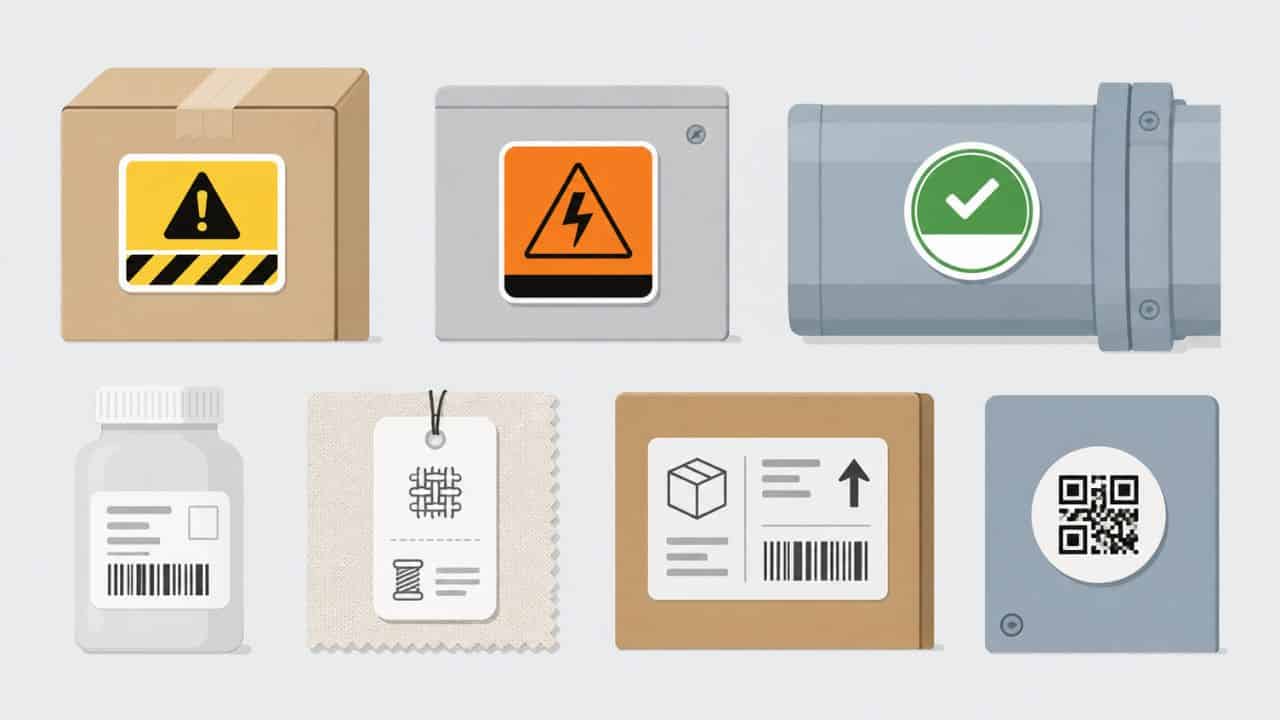
This sticker printing guide is built for procurement, admin, and HR teams at Indian businesses that need to order stickers, labels, or signage in bulk. It works as a single reference covering material types, cutting formats, standard sizes, printing methods, GST and HSN codes, and realistic Indian market pricing, so that by the end of this sticker guide you can brief a vendor with confidence and compare quotes without getting lost in unfamiliar printing terms.
What Is Sticker Printing?
Sticker printing is the process of producing adhesive-backed printed material, usually paper, vinyl, PVC, or foil, cut to a shape and applied to a surface for branding, labelling, identification, or information.
It helps to separate decorative stickers from functional labels early on. A logo sticker on a courier box is doing a branding job. A batch number label on a medicine carton is doing a compliance job, even though both come off a similar printing line.
Stickers are produced using Digital, Offset, Screen, or UV printing, depending on the order quantity, the finish required, and how quickly a business needs delivery, a decision this guide returns to in detail later.
Types of Stickers by Material
Material is the first decision in any sticker order, since it decides where a sticker can be used and how long it will last. Here is how the main options compare for a business buyer.
Getting this choice wrong is a common, avoidable expense. A procurement team that orders paper stock for an outdoor delivery vehicle, or foil stock for a warehouse gate pass, usually ends up reprinting the entire order within weeks.
Vinyl and PVC Stickers
Vinyl and PVC stickers are the toughest option covered in this guide. They resist water, sunlight, and rough handling, and typically hold up for five to seven years outdoors, which is why they dominate vehicle, machinery, and warehouse use.
Because vinyl tolerates temperature swings and repeated handling, it is also the default recommendation for pharmaceutical and cold-chain cartons that move through refrigerated storage and transport.
Paper Stickers
Paper stickers are the most economical choice and the default for indoor use. They come in glossy or matte finish, can be written on, and suit short-run labelling, seasonal promotions, and indoor signage where longevity is not the priority.
Most bulk product labelling for indoor, fast-moving goods still runs on paper stock, simply because the per-piece cost stays low across large order volumes.
Transparent, Clear and Glass Stickers
Made from clear vinyl or polypropylene film, transparent stickers create a printed-on-the-surface look. They are common on glass storefronts, office doors, and premium packaging where a business wants the branding to blend into the glass rather than sit on top of it.
Metallic, Gold Foil and Golden Stickers
Metallic and gold foil stickers add a foil layer for a premium finish, used on certificates, award labels, authentication seals, and luxury product packaging.
These are strictly an indoor option. The foil layer looks striking on a shelf or in a boardroom, but it does not hold up well against sun and moisture outdoors.
Holographic Stickers
Holographic stickers have a shiny, shifting surface used mainly for anti-counterfeit seals, event merchandise, and premium packaging. Like foil stickers, they are indoor-only, since direct sunlight and UV exposure dull the holographic effect over time.
Waterproof Stickers
Waterproof stickers, usually vinyl or PVC based, are built for outdoor signage, vehicle branding, and cold-chain or pharma cartons that face moisture and condensation. If a sticker needs to survive a refrigerated truck or an open yard, this is the category to specify to your vendor.
Plain Sticker Sheets
Plain sticker sheets are uncut, blank adhesive stock that businesses buy to print internally on their own printers, as opposed to a finished, die-cut order from a vendor. It is worth clarifying with your vendor which one you actually need before placing an order, since the two are priced and produced very differently.
| Material | Indoor/Outdoor | Durability | Typical Use | Approx. Cost Tier |
| Vinyl/PVC | Both | 5-7 years outdoor | Vehicles, machinery, warehouses | Mid |
| Paper | Indoor | Weeks to months | Short-run labels, indoor signage | Lowest |
| Transparent/Clear | Mostly indoor | Moderate | Glass doors, storefronts, packaging | Mid |
| Metallic/Gold Foil | Indoor | Long indoor life | Certificates, seals, luxury packaging | Premium |
| Holographic | Indoor | Long indoor life | Anti-counterfeit, premium packaging | Premium |
| Waterproof | Outdoor | High | Outdoor signage, cold-chain cartons | Mid |
Sticker Formats and Cutting Styles
Material decides where a sticker survives. Format decides how it is cut, packed, and applied, and it is a separate decision that procurement teams often overlook until the proof stage.
Die-Cut Stickers
Die-cut stickers are cut precisely to the outline of the design, giving a premium, professional look. They suit logos, branded merchandise, and any sticker where the shape itself is part of the branding.
Kiss-Cut Stickers
Kiss-cut stickers are cut through the sticker layer only, leaving the backing sheet intact, so individual stickers peel off easily one at a time. This format works well for labelling and packaging lines that need quick, repeated peeling.
Round, Square and Custom-Shape Stickers
Round stickers are the standard choice for seals and QR codes. Square stickers suit product labels and price tags. Custom shapes are usually reserved for logos and branded packaging where the outline needs to stand out.
Sticker Sheets
Sticker sheets pack multiple designs or multiple copies onto a single sheet, which keeps costs down for smaller, mixed-design runs, such as an office ordering several different labels in one go.
Sticker Rolls
Sticker rolls are the standard format for high-volume product labelling, since they feed directly into label dispensers and applicator machines used on packaging lines.
Transfer Stickers and Decals
Transfer stickers, also called decals, carry adhesive without a visible background, making them suited to glass, walls, and vehicles, where only the design should show rather than a sticker outline.
Embossed and Textured Stickers
Embossed stickers have a raised, textured finish, often used for premium seals, certificates, and tamper-evident labels, where the texture itself signals authenticity.
| Use Case | Common Size |
| Seals | 1 inch to 1.5 inch |
| Product labels | 2 inch x 3 inch |
| Laptop / QR stickers | 3 inch x 3 inch |
| Event / signage | 3 inch to 5 inch |
| Window / glass | 5 inch and above |
How to Choose Between Sizes, Materials and Formats
A simple three-question framework narrows this down quickly. Where will the sticker be applied? Indoor or outdoor? And what is the expected order volume, and how often will you reorder?
As a quick reference: outdoor and durable points to vinyl or PVC, premium or luxury packaging points to foil or metallic, high-volume labelling points to roll format, and one-off branding points to a die-cut sheet.
When in doubt, share the surface, the environment, and the expected reorder frequency with your vendor rather than guessing at a material or format yourself. Most fulfilment-model vendors will recommend a combination based on this alone.
Printing Methods Used for Stickers
Once material and format are settled, the printing method decides cost and turnaround, and it is worth understanding what you are actually asking a vendor for.
Digital Printing
Digital printing suits small-to-mid volume orders, with fast turnaround and full-colour custom designs, since there is no plate-making cost involved. It is the right call for test batches or designs that change frequently.
Offset Printing
Offset printing is the better choice for large, consistent, recurring volumes, where the per-unit cost drops significantly once a print run crosses into the thousands. Most bulk B2B sticker and label orders end up on offset.
UV Printing
UV printing adds a glossy, scratch-resistant, moisture-resistant finish on top of the print, commonly specified for premium or outdoor stickers that need to look sharp for years rather than months.
Screen Printing
Screen printing suits bold, simple, spot-colour designs, such as single-colour warehouse tags or gate passes, where the design does not need full-colour detail.
As a general rule, ask for digital printing on smaller or urgent orders and offset for large, repeat orders. A fulfillment-model vendor sourcing from multiple partner presses can usually make this call for you, based on your quantity and deadline, rather than you having to specify the machine yourself.
Turnaround expectations differ accordingly. Digital jobs typically move within a few days since there is no plate to prepare, while offset jobs need more lead time upfront but pay that back with a much lower per-piece cost at scale.
For a procurement buyer, the practical takeaway is to mention the order size and the deadline to the vendor, rather than naming a printing method outright, and let the vendor recommend the process that fits both.
Sticker Printing Uses by Business Type
This is where sticker printing stops being generic and starts mapping to what a specific business actually needs, which matters more to a procurement buyer than a list of materials on its own.
The sectors below cover most of the recurring sticker and label demand seen across Indian mid-size and large businesses, from pharma production floors to retail storefronts.
Product and Packaging Labelling
FMCG, pharma, and textile businesses rely on stickers for product labels, batch and ingredient information, and compliance labelling on cartons, pouches, and bottles. These orders are usually recurring, tied to production runs, and need consistent colour matching across batches.
Branding and Logo Stickers
Across every sector, branding and logo stickers go on packaging seals, cartons, giveaways, and merchandise, functioning as a low-cost, high-visibility branding tool that many businesses reorder alongside their regular stationery.
QR Code Stickers
QR code stickers are a fast-growing use case, covering product authentication, digital menus, asset tracking, and marketing campaigns that link a physical surface to a digital destination. Many businesses now order these alongside standard product labels.
Signage: Glass Door, Wall and Window Stickers
Real estate, retail, and hospitality businesses use glass door, wall, and window stickers for branded office entrances, showroom windows, and in-store wall graphics, usually specified in vinyl transfer for a clean, printed-on look.
Vehicle Branding: Car and Bus Stickers
Logistics, automobile, and corporate fleet operators use car and bus stickers for fleet branding, delivery vehicle decals, and route or company identification, almost always in waterproof vinyl given constant weather exposure.
Identification and Admin Stickers
Manufacturing, logistics, and warehousing teams rely on name stickers, address labels for dispatch, gate-pass stickers, and asset tags to keep day-to-day operations organised, usually as a recurring admin order rather than a one-off.
These orders rarely need a premium finish, but they do need consistency across batches, since a mismatched gate-pass sticker or an unreadable address label creates real operational friction on a busy dispatch floor.
| Industry | Common Sticker Use | Recommended Material/Format |
| Pharma | Product/compliance labels | Waterproof vinyl or paper roll |
| Real Estate | Glass door/window branding | Vinyl transfer |
| Logistics | Shipment/address labels | Roll-format paper or vinyl |
| Retail | POP/wall stickers | Die-cut vinyl or paper |
| Manufacturing | Process tags, safety signage | Vinyl or PVC |
| FMCG | Product/branding labels | Paper or vinyl roll |
| Automobile | Fleet decals, part labels | Vinyl |
Sticker Printing Price and Cost Factors in India
Pricing varies widely by material, size, quantity, finish, and printing method, so treat any single number here as a starting reference rather than a firm quote.
At the small-format end, bulk online listings show paper stickers starting around Rs. 0.30 paisa for a 1×1 inch piece, with synthetic non-tearable and vinyl stock closer to Rs. 0.90 paisa per piece at similar sizes, dropping further per piece as quantity increases.
Marketplace listings for custom printed stickers of varied sizes commonly range from roughly Rs. 0.18 to Rs. 1 per piece depending on material and finish, while large-format signage stickers are usually priced per square inch, often starting near Rs. 0.30 paisa per square inch depending on material and vendor.
Quantity has a direct effect on per-unit cost. Small trial runs of 50 to 100 pieces carry the highest per-unit price because setup cost is spread over fewer units. Orders of 500 pieces sit at a more comfortable per-unit rate for most small and mid-sized businesses, and 1,000-plus piece orders typically get the best per-unit pricing, which suits recurring product labelling and bulk branding needs.
Sticker size also matters beyond just material. A larger sticker costs more partly because of material used, but also because fewer large stickers fit on a single print sheet, which reduces the efficiency of each print run.
Finish adds another layer of cost. Lamination or UV coating, a die-cut shape instead of a standard rectangle, and multiple designs within one order all push the per-piece rate up, even when the base material stays the same.
For example, a pharma company ordering 5,000 waterproof vinyl labels for cartons will typically pay a noticeably lower per-piece rate than a small clinic ordering 200 name stickers on paper, simply because of the volume difference, even though paper is the cheaper material.
Key cost drivers to check on any quote: order quantity or MOQ, sticker size, number of colours, lamination or UV coating, die-cut versus standard shape, and whether the order covers a single design or multiple designs.
As a trader-fulfilment model sourcing from multiple partner presses, bulk and recurring orders, from small batches to several thousand pieces, typically get better per-unit pricing than a one-off small run placed with a single vendor.
Sticker Printing HSN Code and GST in India
Most printed stickers in India attract 18% GST, regardless of material, a rate that has applied to self-adhesive plastic stickers since July 2017.
Plastic, vinyl, and PVC self-adhesive stickers generally fall under HSN 39199010, within Chapter 39, which covers plastics and articles made from plastic, whether or not the sticker is printed or embossed.
Paper and paperboard stickers and labels generally fall under HSN 4821, within Chapter 48, with printed labels classified under 482110 and unprinted labels under 482190.
A small number of specialised categories, such as DTF or heat-transfer decals, or plastic stickers used specifically on garments, can fall under different codes, which is another reason to confirm classification rather than assume it.
Exact HSN classification depends on the specific material and finish, so businesses should confirm the applicable code with their GST practitioner or vendor invoice before filing, since this is procurement-relevant information and not tax advice.
GST-compliant invoicing is standard practice when ordering from an established B2B printing vendor, and it is a reasonable thing for a procurement or admin buyer to confirm upfront, before the first purchase order goes out.
For businesses with turnover above the applicable threshold, a six-digit HSN code is generally required on invoices, and export-import shipments typically need the full eight-digit code, so it is worth checking which level applies to your business before your first bulk order.
None of this replaces advice from your own GST practitioner. Treat the codes and rates in this guide as a starting reference for a conversation with your vendor and your accountant, not as the final word on your specific invoice.
How to Order Custom Stickers Online
Ordering stickers in bulk is straightforward once you follow a clear sequence from specification to delivery.
- Decide material, format, and size using the framework covered earlier in this guide.
- Prepare print-ready artwork at 300 DPI resolution, in CMYK colour mode, with a 3mm bleed margin, since RGB files or low-resolution logos are the most common reason a proof gets delayed.
- Confirm quantity or MOQ with your vendor and get a written quote.
- Approve a proof before the full run goes into production.
- Production and delivery, with timelines depending on the printing method chosen.
Before placing an order, it is worth asking a vendor about MOQ, turnaround time, GST invoicing, their sample or proof process, PAN India delivery capability, and whether they can handle multiple materials and finishes under one order.
A fulfilment-model vendor, one that sources from several partner presses rather than owning a single machine, is often an advantage here. A business needing paper, vinyl, and foil stickers in one recurring order does not have to split that order across three separate vendors.
Most delays at this stage come down to artwork, not production. Sending a vector logo file and confirming the exact Pantone or brand colour upfront saves a full proof-and-reprint cycle later.
Once these basics are settled, reordering the same sticker or label becomes routine. Most procurement teams move to a standing purchase order with their chosen vendor after the first two or three runs go smoothly.


